The History of Virginia: The Old Dominion
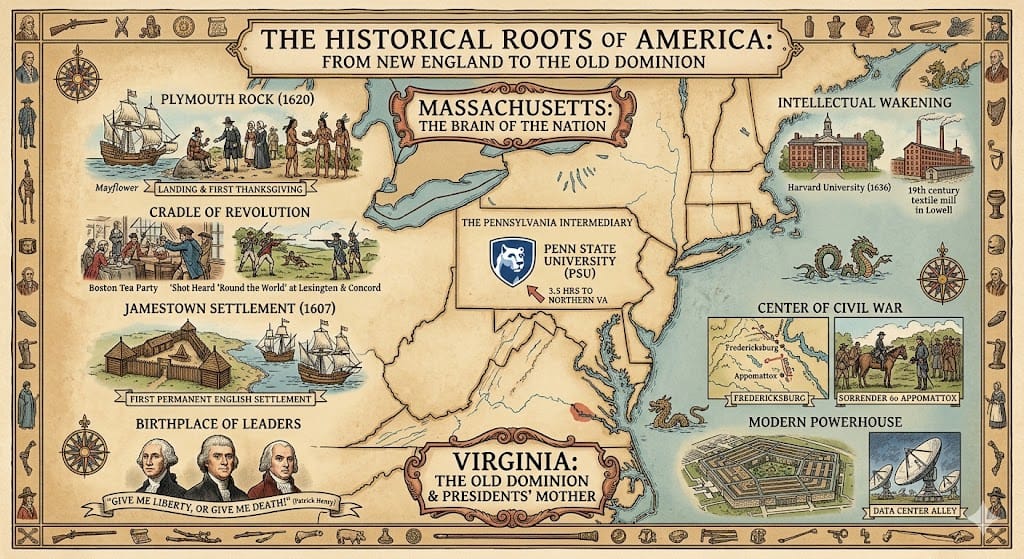
1. Survival, Tobacco, and the First Seeds (1607 – Late 17th Century)
- Jamestown (1607): Thirteen years before the Pilgrims reached Plymouth, the Virginia Company of London established Jamestown. It was the first permanent English settlement in North America. Unlike the religious Pilgrims, these were adventurers seeking gold and profit.
- The "Starving Time": The early years were brutal. Colonists faced extreme hunger, disease, and conflict with the Powhatan Confederacy. At one point, the population dwindled so low that the colony nearly collapsed.
- "Brown Gold": John Rolfe (who later married Pocahontas) introduced a sweeter strain of tobacco. This "cash crop" saved Virginia economically but created a massive demand for labor, leading to the arrival of the first enslaved Africans in 1619—a pivotal and tragic moment in American history.
2. The Cradle of Presidents and Revolution (18th Century)
By the 1700s, Virginia had become the wealthiest and most influential colony, producing the intellectual titans who would build the United States.
- The Voice of Liberty: In 1775, at St. John's Church in Richmond, Patrick Henry gave his immortal speech: "Give me liberty, or give me death!"
- The Architects of Democracy: Virginia was the home of Thomas Jefferson (author of the Declaration of Independence), James Madison (Father of the Constitution), and George Washington (the General who led the Revolution and became the first President).
- The Mother of Presidents: To this day, Virginia holds the record for producing the most U.S. Presidents (eight in total).
3. The Epicenter of the Civil War (1861 – 1865)
Because of its location and power, Virginia was the primary battlefield during the American Civil War.
- The Capital of the Confederacy: Richmond, Virginia, served as the capital for the Southern states.
- A Land Scared by Battle: More major battles were fought on Virginian soil than in any other state (including Bull Run, Fredericksburg, and Chancellorsville).
- The Surrender: The war effectively ended at Appomattox Court House, Virginia, where General Robert E. Lee surrendered to Ulysses S. Grant in 1865, beginning the long road to national reunification.
4. The Global Powerhouse (20th Century – Present)
Modern Virginia has transformed from an agricultural society into a global hub for defense, intelligence, and technology.
- The Pentagon & CIA: Due to its proximity to Washington D.C., Virginia houses the world’s largest office building (The Pentagon) and the CIA headquarters in Langley.
- The Internet's Backbone: Northern Virginia is often called "Data Center Alley." It is estimated that 70% of the world's internet traffic passes through data centers in Loudoun County every single day.